
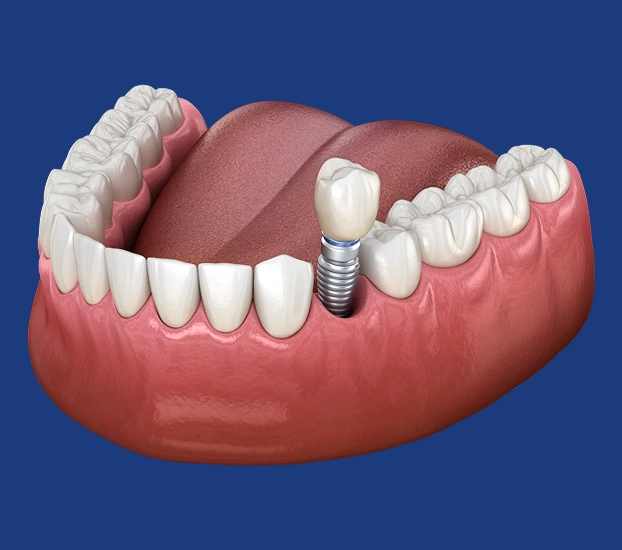
Who Is a Candidate for Dental Implants
Good candidates typically have good oral hygiene, healthy gums, and adequate bone volume and density, though grafting or a sinus lift may be advised if bone volume is insufficient. Non-smokers typically heal more predictably, and patients with systemic health conditions may need coordination with their physician before proceeding.
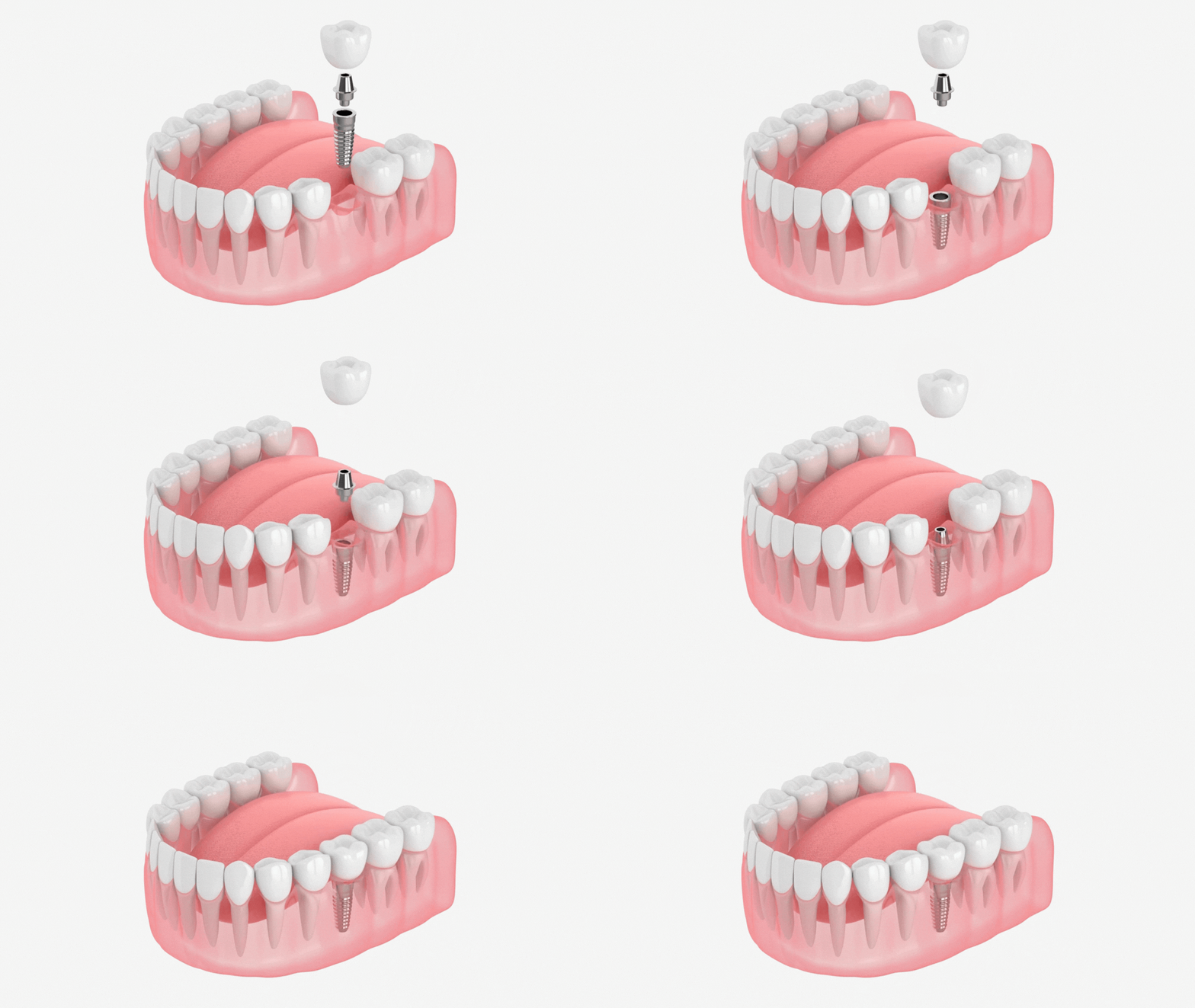
The Treatment Journey (Typical Single Tooth)
- 1Consultation and imaging, often including a CBCT scan
- 2Surgical placement, often performed under local anesthesia with comfort options available
- 3Healing and integration, which can take several weeks to months depending on location and your individual health
- 4Abutment and crown fabrication, custom shaded and contoured to match your smile
- 5Ongoing maintenance through hygiene visits and home care to protect your implant long term
Benefits of Dental Implants
- Stability and comfort compared with removable options
- Support for facial structure by limiting bone resorption
- Preservation of adjacent teeth, since no drilling into neighbouring teeth is required as with a traditional bridge
Alternatives to Dental Implants
A fixed bridge or a removable partial denture are both alternatives to consider. Your dentist will compare the pros and cons of each option for your specific case.
Recovery and Aftercare
Plan for soft foods initially, though most patients resume normal activities within a few days. Keep the surgical site clean according to your instructions, and call our office if you notice unusual swelling or discomfort.
Ready to Rebuild Your Smile?
If you are missing one or more teeth, dental implants offer a durable, natural-looking solution. Book an implant consultation with our Waterloo team to find out if you are a candidate.
Frequently Asked Questions About Dental Implants
Most patients feel pressure but little to no pain during the procedure itself, thanks to local anesthesia. Root canal treatment is designed to relieve the pain caused by an infected tooth, not create it.
hose with multiple canals, may require two visits to complete treatment properly.
Frequently, yes, especially for back teeth like molars, since a crown helps protect the tooth from cracking under normal biting forces after treatment.
Root canal failure is rare, but it can happen. If it does, re-treatment or a referral to a specialist may be discussed to help save the tooth.
Most patients can resume routine activities the same day, though some choose to take it easy for the rest of the day if they experience any tenderness or grogginess from anesthesia.
Call our office right away. Post-op sensitivity and minor bite adjustments are common and manageable, and we want to make sure your recovery stays on track.
No, not always. Antibiotics are only prescribed when clinically indicated. The root canal procedure itself treats the source of infection directly.
With a proper restoration, such as a crown when needed, and consistent oral hygiene, many root canal treated teeth last for many years, often functioning just like a natural tooth.