
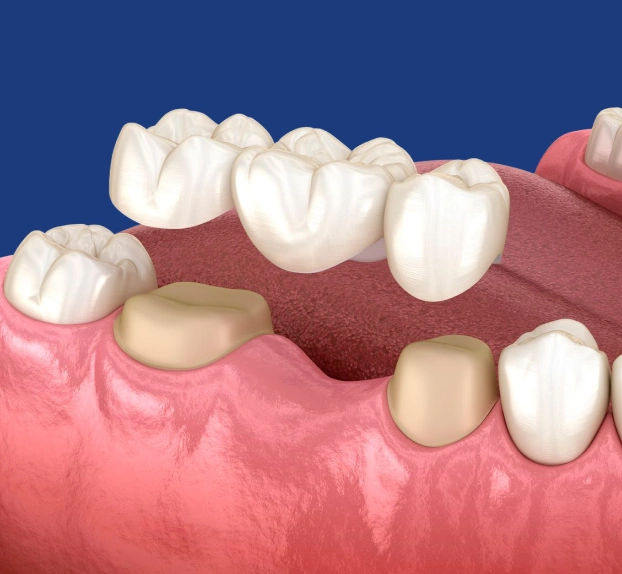
When Crowns Are Recommended
- Large or fractured fillings, or deep structural cracks
- Protection after root canal treatment, especially on molars
- Restoring worn or short teeth caused by grinding or clenching
- Cosmetic improvements for misshapen or severely discoloured teeth
When Bridges Are Recommended
- One missing tooth with healthy abutment teeth on both sides
- Multiple adjacent gaps, depending on the case
- A fixed option when implants are not desired or suitable
Materials & Aesthetics
- Zirconia offers high strength and is ideal for molars and patients who grind their teeth
- Layered porcelain and ceramics provide premium aesthetics for front teeth
- Porcelain fused to metal remains a versatile legacy option, considered case by case
- Shade and shape are matched using photos and shade guides, with close communication with the dental lab to match translucency and contour
What to Expect: Crown Visit
- 1Exam and planning, including photos, X-rays if clinically indicated, and shade selection
- 2Tooth preparation, with conservative reduction to make space for the crown
- 3Impressions or digital scans taken, with a temporary crown placed
- 4Lab fabrication of your custom crown to match your shade and bite
- 5Fit and cementation, checking contacts and occlusion before polishing and cementing with care instructions
What to Expect: Bridge Visit
- 1Assessment to confirm abutment tooth health and bite forces
- 2Preparation of abutment teeth, or use of implants if implant-supported
- 3Impression or scan taken, with a temporary bridge placed
- 4Lab fabrication of your custom bridge
- 5Fit, occlusion checks, and cementation
- 6Home care review covering how to clean under the pontic using floss threaders or interdental brushes
Care and Longevity
- Brush and floss daily, using threaders or superfloss under bridges
- Wear a nightguard if you clench or grind your teeth
- Avoid biting very hard items such as ice or hard candies
- Keep up with regular hygiene visits and bite checks to prolong the lifespan of your restoration
Risks and Considerations
Abutment teeth must be healthy and well supported for a bridge to succeed. Because bridges link teeth together, if one abutment fails, the restoration can be compromised. Crowns do not whiten over time, so complete any teeth whitening before your crown is made, then match the crown shade to your whitened teeth. Some initial sensitivity can occur and usually resolves with time or minor adjustments.
Ready to Restore Your Smile’s Strength?
If a tooth is cracked, heavily filled, or missing, our Waterloo team can walk you through your crown or bridge options and build a plan that fits your smile and budget.
Book an AppointmentFrequently Asked Questions About Crowns & Bridges
With good home care and regular hygiene visits, many crowns last 10 to 15 years or longer. Wearing a nightguard if you grind your teeth can also help extend the lifespan of your crown.
Yes. Shade, translucency, and contour are all customized to blend seamlessly with your nearby teeth, so most crowns are difficult to distinguish from natural teeth.
Frequently, yes, especially on back teeth, since a crown helps reduce the risk of fracture after the procedure. We will review your specific case and let you know if a crown is recommended.
It depends on your bone and tooth health, your timeline, and your goals. We will compare the pros, cons, and costs of each option so you can make an informed decision for your situation.
Minor adjustments are common right after delivery and are quick to make in the office. Let us know if anything feels off so we can fine tune the fit.
Keep it safe and call our office right away. We will get you in to have it re-cemented as soon as possible.
No, crowns do not whiten like natural teeth. If you are considering whitening, plan to do it before your crown is made, and maintain your results with regular cleanings afterward.
We use local anesthesia and gentle techniques throughout the process. Any tenderness after your visit is usually mild and resolves quickly.
Use floss threaders, superfloss, or interdental brushes to clean underneath the pontic each day. Your hygienist can show you the technique that works best for your bridge.
Yes. If you experience dental anxiety or prefer to be more relaxed during treatment, visit our Sedation Dentistry page to learn about the options available.